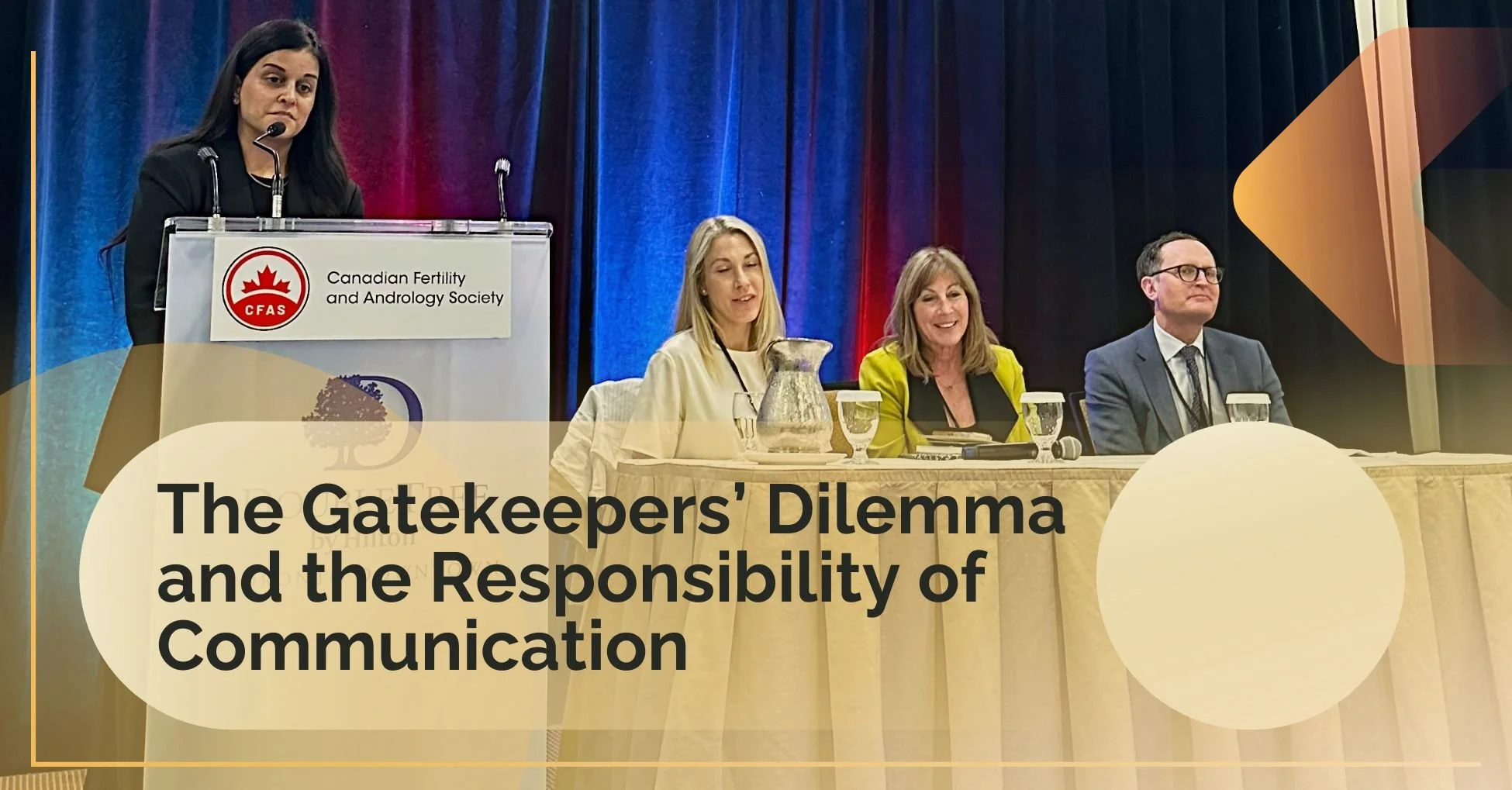
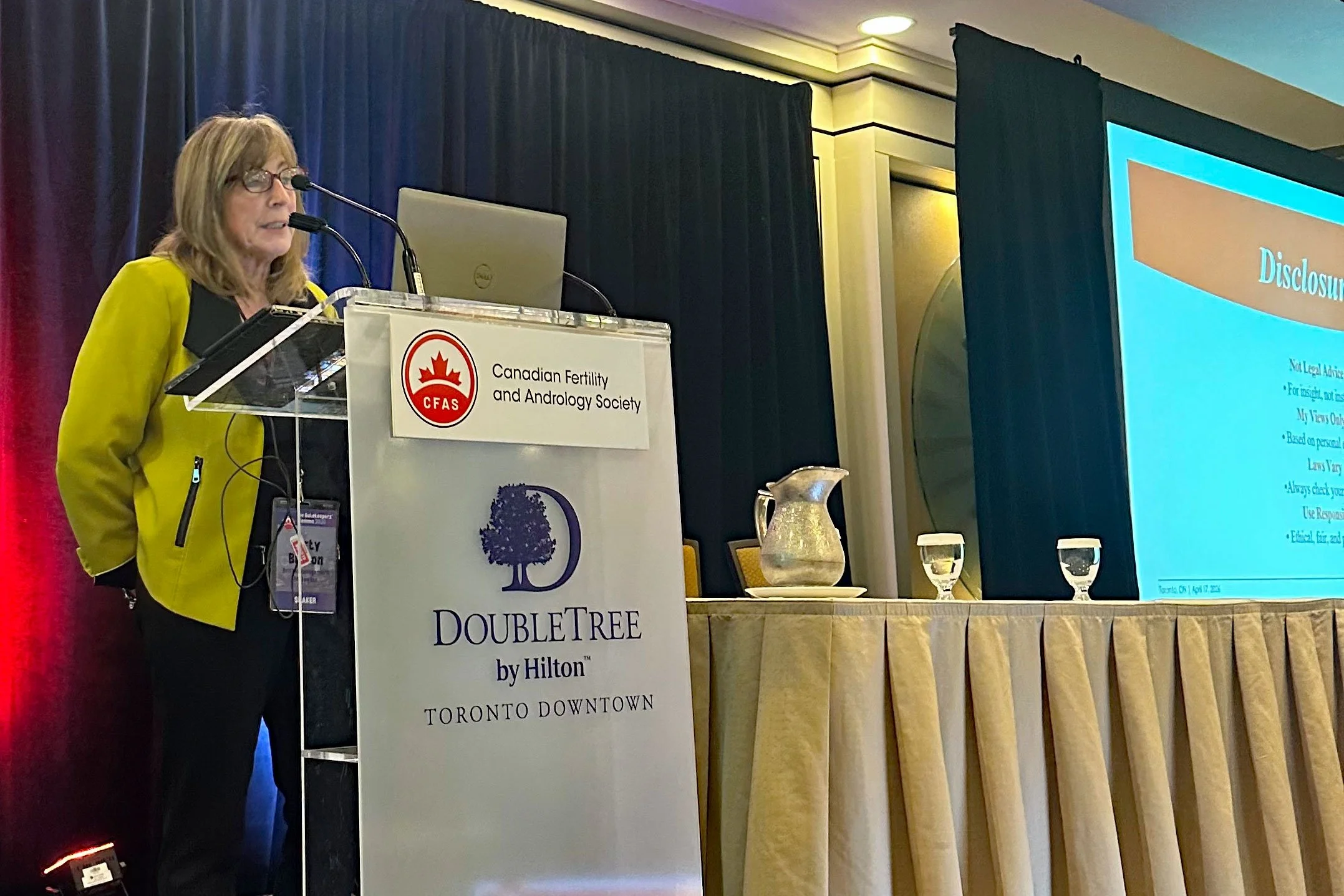
On Friday, April 17, 2026, I had the pleasure of speaking in Toronto at the Canadian Fertility and Andrology Society (CFAS) conference as part of the Gatekeepers’ Dilemma Speaker Conference. It was my first time attending an event hosted by this organization, and I came away genuinely impressed not only by the professionalism of the conference, but by the quality of the conversations taking place across disciplines.
CFAS brings together experts, practitioners, researchers, and leaders who are shaping the future of fertility care, reproductive medicine, and andrology in Canada. To be invited into that space and contribute to the dialogue was both an honour and a privilege.
The Gatekeepers’ Dilemma
The theme of the event—The Gatekeepers’ Dilemma—could not be timelier. Today, every institution, organization, and professional group faces a difficult balancing act: how do we ensure accurate, trustworthy information reaches people while navigating a world where anyone can publish, promote, influence, or mislead in seconds?
The traditional “gatekeepers” of information such as media organizations, professional bodies, regulators, and credentialed experts, no longer control the flow of communication in the way they once did. Social media platforms have democratized publishing, which has created extraordinary opportunities for education and connection. But it has also created serious challenges around misinformation, manipulation, and trust.
That tension was at the heart of my presentation.
Social Media Uses, Abuses, and the Truth of Advertising
My talk focused on Social Media Uses and Abuses and the Truth of Advertising, a topic that affects every industry, but is especially significant in healthcare and fertility where people are often seeking answers during vulnerable and emotional moments.
Social media can be an incredible tool when used responsibly. It can educate, connect communities, reduce stigma, and make specialized knowledge more accessible. For many patients and families, it can provide reassurance and support when they need it most.
But those benefits come with responsibilities.
When information is exaggerated, misleading, fear-driven, or designed purely to capture attention, it can do real harm. Users may make decisions based on incomplete claims. Expectations may be distorted. Trust can be eroded. Professionals who are trying to communicate ethically can find themselves competing with louder, more sensational voices.
That is why truth in advertising and responsible communication matter so deeply.
Responsible and Relevant Information
One of the central messages of my talk was that communication should always strive to be both responsible and relevant.
Responsible information means being accurate, transparent, and fair. It means avoiding misleading claims, selective statistics, or emotional tactics designed to manipulate rather than inform. It means recognizing that audiences deserve honesty.
Relevant information means understanding what people actually need to know. It is not enough to simply broadcast content. Good communication meets audiences where they are, answers real questions, and provides clarity instead of confusion.
In fields connected to health, wellness, and personal decision-making, this standard becomes even more important. People are not just scrolling. They are often searching for hope, guidance, and trustworthy answers.
Avoiding Personal and Political Attacks
Another important point I addressed was the growing tendency on social media to criticize personal practices, lifestyles, or political views in ways that distract from meaningful discussion.
Disagreement is natural. Debate can be healthy. But when conversations become personal, hostile, or performative, everyone loses.
Brands, professionals, and organizations should think carefully before using social media to shame individuals, mock opposing viewpoints, or weaponize controversy for engagement. Short-term attention may come at the cost of long-term credibility.
There is a difference between standing for values and provoking outrage. The strongest communicators know how to inform, persuade, and lead without unnecessary division.
Why This Matters Now
We are living in an era where trust is one of the most valuable assets any organization can have.
Audiences are more skeptical. They can spot inauthentic messaging quickly. They are increasingly aware when algorithms reward outrage over nuance. And they remember who communicated with integrity when it mattered.
For professionals and institutions in healthcare especially, credibility is not a branding exercise: it is foundational.
That means choosing evidence over hype, clarity over noise, and service over self-promotion.
A Memorable First Experience with CFAS
Beyond the presentation itself, what stood out most was the calibre of people in the room. The attendees were thoughtful, engaged, and clearly committed to advancing standards within their field.
It was refreshing to be part of conversations where people were not only discussing technical excellence, but also ethics, communication, and public trust. Those issues often determine whether expertise truly reaches and helps the people who need it.
As a first-time attendee, I felt welcomed and energized by the experience.
Final Thoughts
I’m grateful to the Canadian Fertility and Andrology Society for the invitation to speak and for creating space for these important conversations.
The future will belong to organizations and leaders who understand that communication is no longer separate from service: it is part of service. The way we share information, advertise responsibly, and engage with the public matters.
If we want stronger trust, better outcomes, and healthier public dialogue, we need fewer provocateurs and more responsible gatekeepers.
Thank you again to CFAS for an excellent event in Toronto. I look forward to staying connected and hopefully returning in the future.
If your organization is looking to strengthen its hiring practices, ensure compliance, and protect its reputation, my team and I are here to help. Britton Management Profiles, Inc is Canada’s first background screening company with more than 50 years of industry leadership. We provide comprehensive, ethical, and fully compliant social media checks and background screening solutions that will help us all to navigate the complexities of hiring in the digital age.